

MASC 4 DUCK
How to be the most f*ckable plant at the botany conference, for some reason.
debris:
Robert Indiana made a painting called “Grass” and it looks like a swatch for living.
and then also:
What goes around comes around, and karma’s a bitch, and it’s just the circle of life, and one day you’re in, then the next day you’re out.
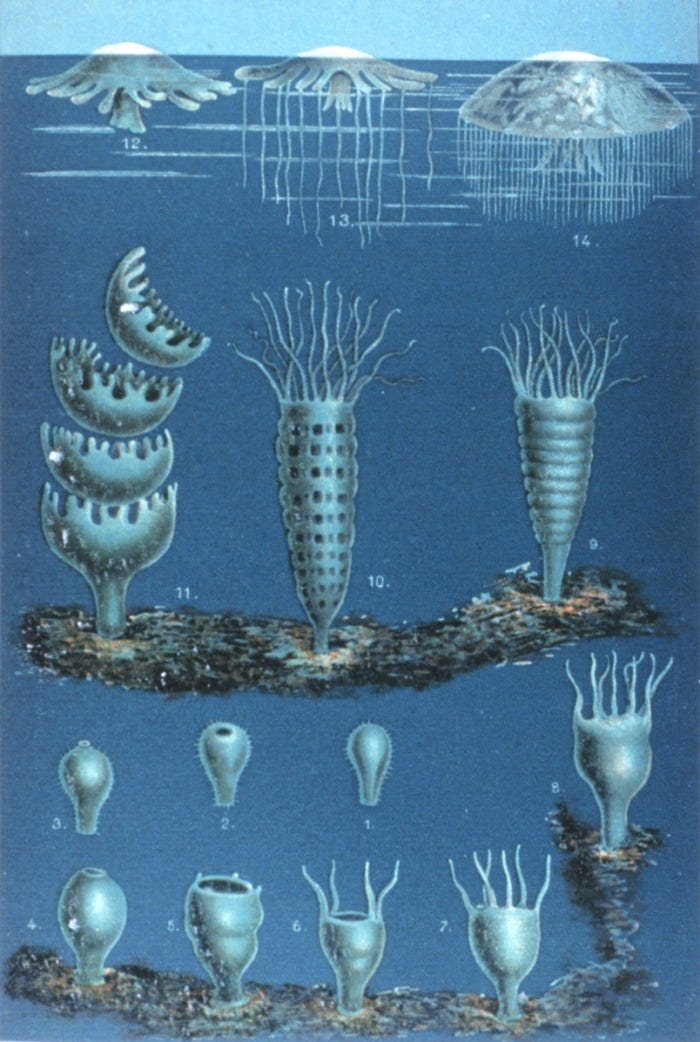
Matthias J. Schleiden published an article on duckweed, perhaps the first article on duckweed, in 1839—”Prodomus Monographiae Lemnacearum.” Being the first to do something can bring celebrity, but duckweed description wasn’t Schleiden’s first first. His first first was co-founding cell theory—the theory that all organisms are comprised of smaller, self-contained parts known as cells. Inklings of such an idea could be found in Lucretius’ On the Nature of Things (first century BCE) or Leibniz’s Monadology (1714), but Schleiden made the idea modern by observing its evidence under a microscope. Now, we take for granted that our bodies are comprised of smaller, specialized bodies and—if we get a little too high—we might even think our sofas are comprised of billions of much smaller sofas. This has never happened to me, of course.
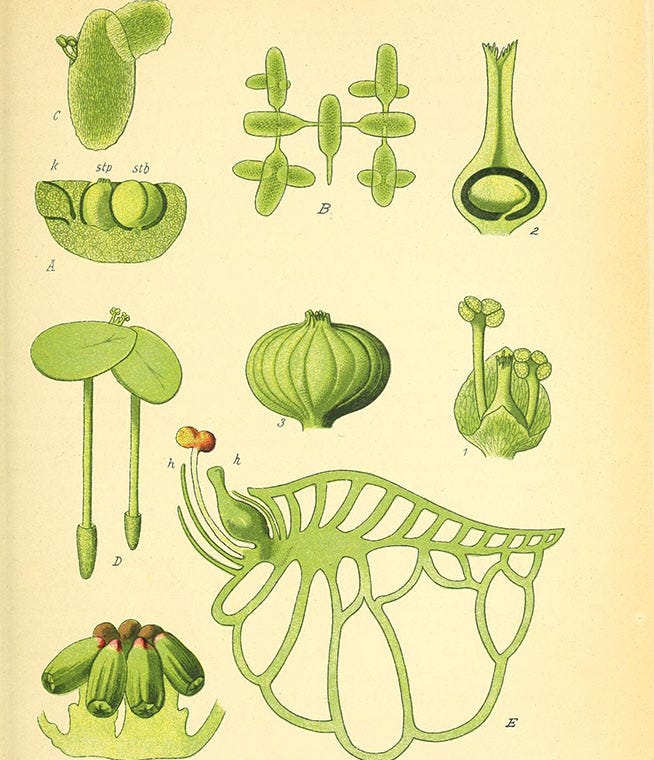
Soon after floating into the scientific spotlight, duckweed returned to botanical obscurity. There, it continued to grow small. Duckweed is a simplified plant. Instead of having the elongated stem of a day-lily or the lacy leaves of a carrot, duckweed has a “frond”: a combined stem/leaf organ which makes up the majority of its body. Some duckweeds, like Spirodela polyrhiza have roots (poly = many, rhiza = roots). Others, like Wolffia arrhiza have no roots (a = no, rhiza = roots). Rootless duckweeds absorb minerals in the water column directly through the underside of their fronds. As though this rootlessness didn’t make Wolffia arrhiza notable enough, W. arrhiza is also the smallest flowering plant on earth—measuring about one millimeter in width.
A change in scientific fashions brought duckweed back to prominence in the 1950s. Though we do not often think of science as having “fashions”—and although current anti-science movements might make us hesitant to question science’s objectivity—things do become fashionable and unfashionable in science, much as they do in art, philosophy, or film. Kenneth Acosta and his colleagues write that, prior to the 1950s, plant scientists described the plants around them, noted their ecological connections and geological contexts, but the cellular mechanics of how plants do what they do was of less interest. Postwar scientific shifts, like the discovery of DNA in 1951, changed this. Botanists began looking at “model organisms” to understand the biological processes at play in germinating, growing, flowering, fruiting, and the like. Model organisms are studied in depth, with the hope that lessons learned can be extrapolated into larger patterns: if XYZ gene in the lab frog does ABC, then perhaps XYZ gene in the fish, the fox, the FedEx man does something similar. That was the hope of scientists studying one duckweed species in partiular, Spirodela polyrhiza.
S. polyrhiza was a model model organism for three reasons: size, simplicity, and speed. Although S. polyrhiza is about ten times larger than W. arrhiza—one centimeter in diameter rather than one millimeter—it’s still quite tiny. Perfect for cramped lab spaces. Its simplified frond structure is ideal, too. Unlike morphologically complex plants (think fruiting orange trees or flowering grasses), S. polyrhiza has an unassuming round frond and a few short roots. No complicated leaf patterns, convoluted flower parts, or hidden stem architecture to quantify. Though capable of flowering, S. polyrhiza tends to reproduce asexually—again ideal. Asexual reproduction produces clones which are genetically identical to their “parent” plants, meaning that XYZ gene should remain the same across generations of duckweed, unless scientists decide to tweak it. Given the same lab conditions and experimental actions, the genetic stability of S. polyrhiza means that an experiment in 1959 and an experiment in 1969 should have similar results. Best of all, S. polyrhiza produces new clones every few days. A month-long experiment could encompass dozens of duckweed generations. S. polyrhiza made botanical science simple, repeatable, and quick.
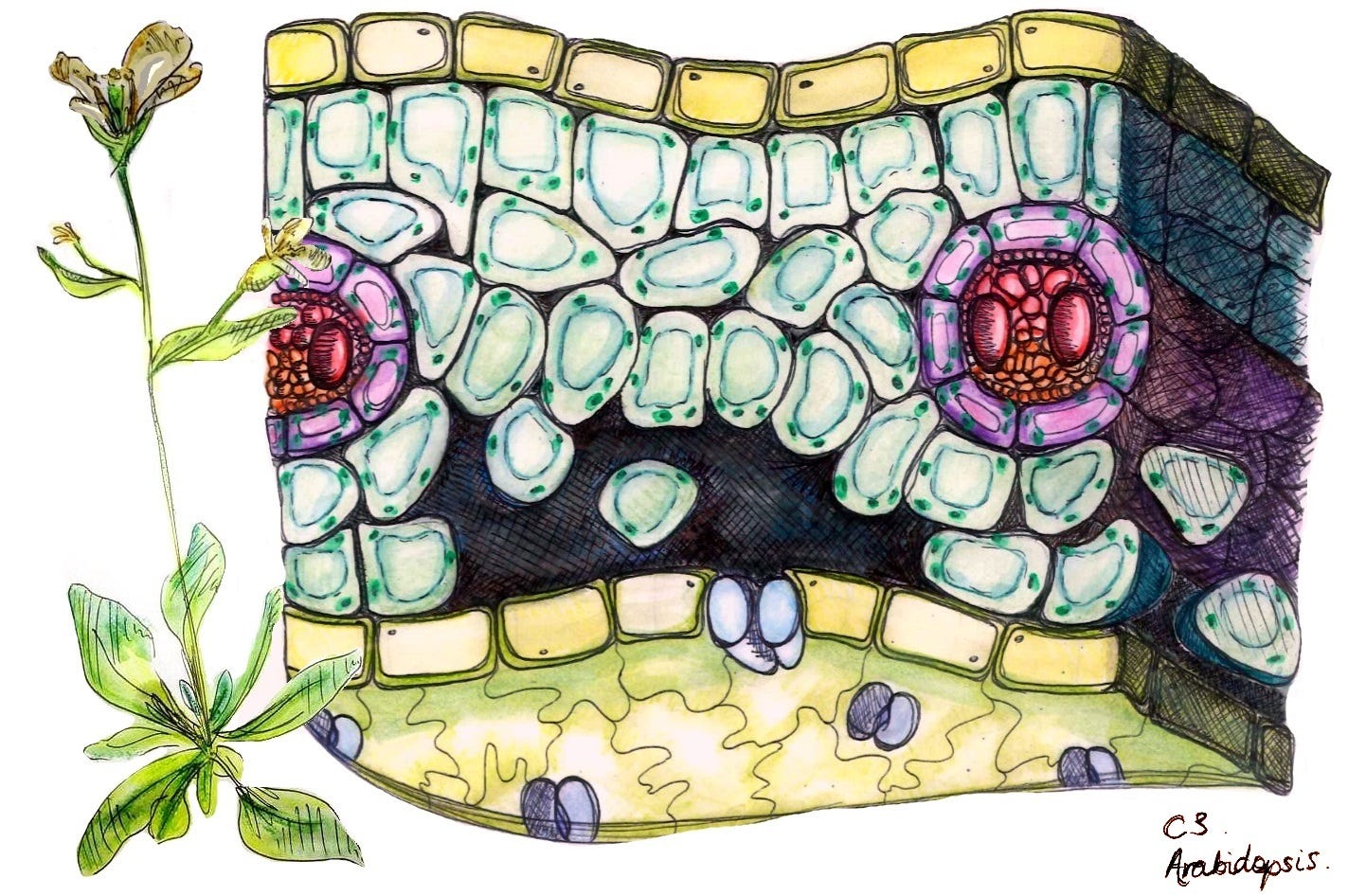

But S. polyrhiza was on its way out even as it was on its way in. In 1937, German botanist Freidrich Laibach became interested in another potential model organism—a wild mustard known as Arabidopsis thaliana, or simply Arabidopsis. Unlike S. polyrhiza, Arabidopsis is a land plant. Like S. polyrhiza, it’s very easy to care for and reproduces quickly—setting thousands upon thousands of seeds after just six or eight weeks of growth. Throughout the 1950s and 60s, Laibach convinced other scientists to study Arabidopsis, and an Arabidopsis-focused publication known as AIS (Arabidopsis Information Service) was founded in 1965.1 Over the next thirty years, scientists interested in Arabidopsis would not only build a research infrastructure of around the plant—publications, groups, plant production centers, and more—but would also connect their efforts to trends and opportunities in the botanical sciences. Arabidopsis would become hot by playing it cool.
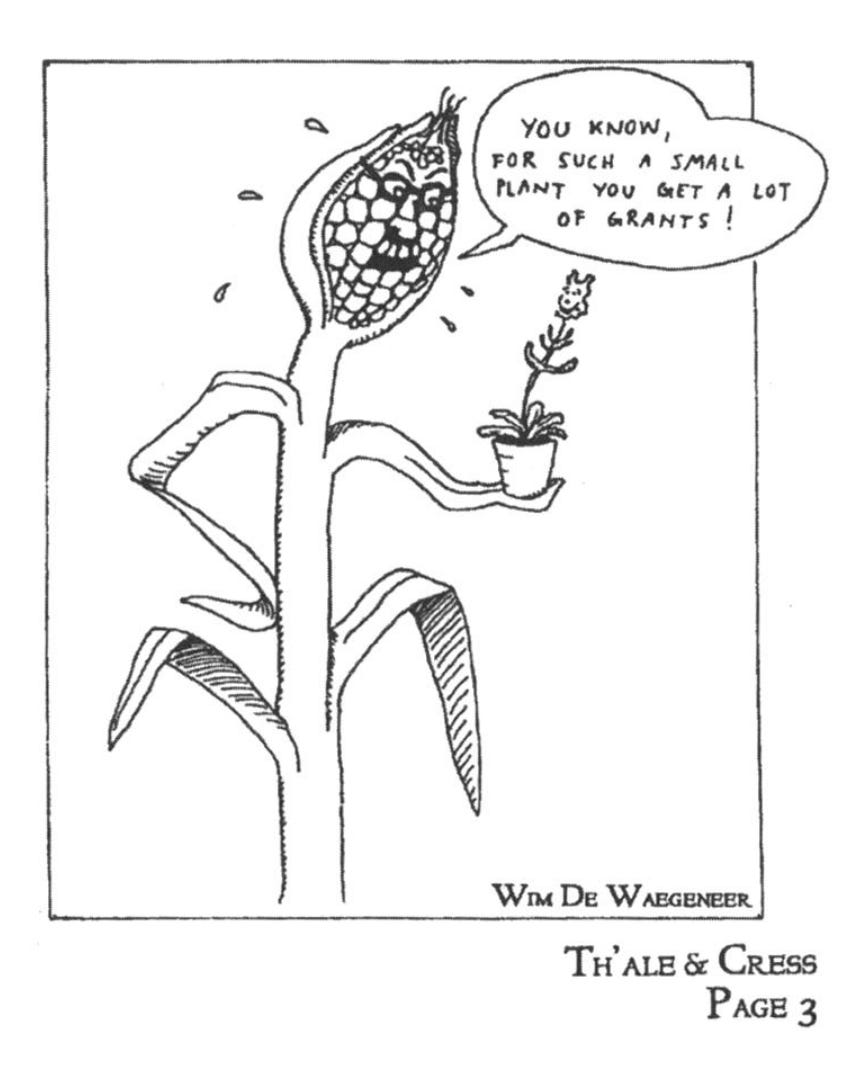
In the early 1980s, Sabina Leonelli writes, fruit fly research was both trendy and competitive. For young research scientists, it was easier to secure funding and establish name recognition if one flew far from the flies. The comparatively unpopular world of plant genetics was ideal, and Arabidopsis was poised to help. Though resistant to chemical treatment, Arabidopsis can be prompted to mutate fairly easily, as Kenneth Feldman demonstrated in 1986. He did this by inserting a plant gene into a bit of agrobacteria (a bacteria which infects plants) and spraying it on Arabidopsis. His work indicated that this easy-to-grow, quickly reproducing plant could also be genetically manipulated as a means of understanding those same genes. In 1987, a group of Arabidopsis researchers founded an organization for sharing research and pooling financial resources. They called the group MASC—Multinational Arabidopsis Steering Committee.
Leonelli argues that Arabidopsis’ is a model organism because we made it one—not because it has special qualities. A complicated network of researchers, organizations, funding opportunities, and career strategies banked on Arabidopsis as the hot new thing. Arabidopsis did what it does, and humans made what it does the ideal thing to do. Arabidopsis remains a key model species in botany, and the plant’s full genome was published in 2000. In the decades of its stardom, Arabidopsis has become two kinds of plant, Leonelli suggests: a standardized creature of the lab, and a wild plant (a “weed”) growing around the world. According to iNaturalist, there’s an Arabidopsis growing in Frick Park only two miles from my home. Outside of the lab, without all that human structure, it’s just another wacky cabbage growing along a walking trail. It has a very humble name in English: “mouse-eared cress.”
S. polyrhiza—that once-favored duckweed—isn’t all washed up just yet, though. In their 2021 article, Kenneth Acosta and friends argue that S. polyrhiza should be a model organism once more. Not only is it—like Arabidopsis—simple to care for and quick to reproduce, but it also grows in water. Fine-tuning laboratory soil is a chore, but finely tuning the waters of S. polyrhiza may be more straightforward. Arabidopsis, the case is being made, isn’t as easy going as it seems. All that soil she needs?
such a diva
But duckweed has a detached, floating style.
so hot
Upcoming Performances & Readings

May 30 — PGH Book Fest @ Hillman Library—11:30 AM-12:30 PM
June 13 — PGH UFO Club Book Sale @ Fungus Books — 12:00 PM
okay:
Clover flowers are tubes!!!
Laibach, a German scientist, started promoting Arabidopsis in the 30s. He got other scientists on-board in the 50s and 60s. I’ll let you guess what he was up to in between!
Robert Indiana mentioned <3