

Find Your Best Light
Moving with the Sun in Summertime

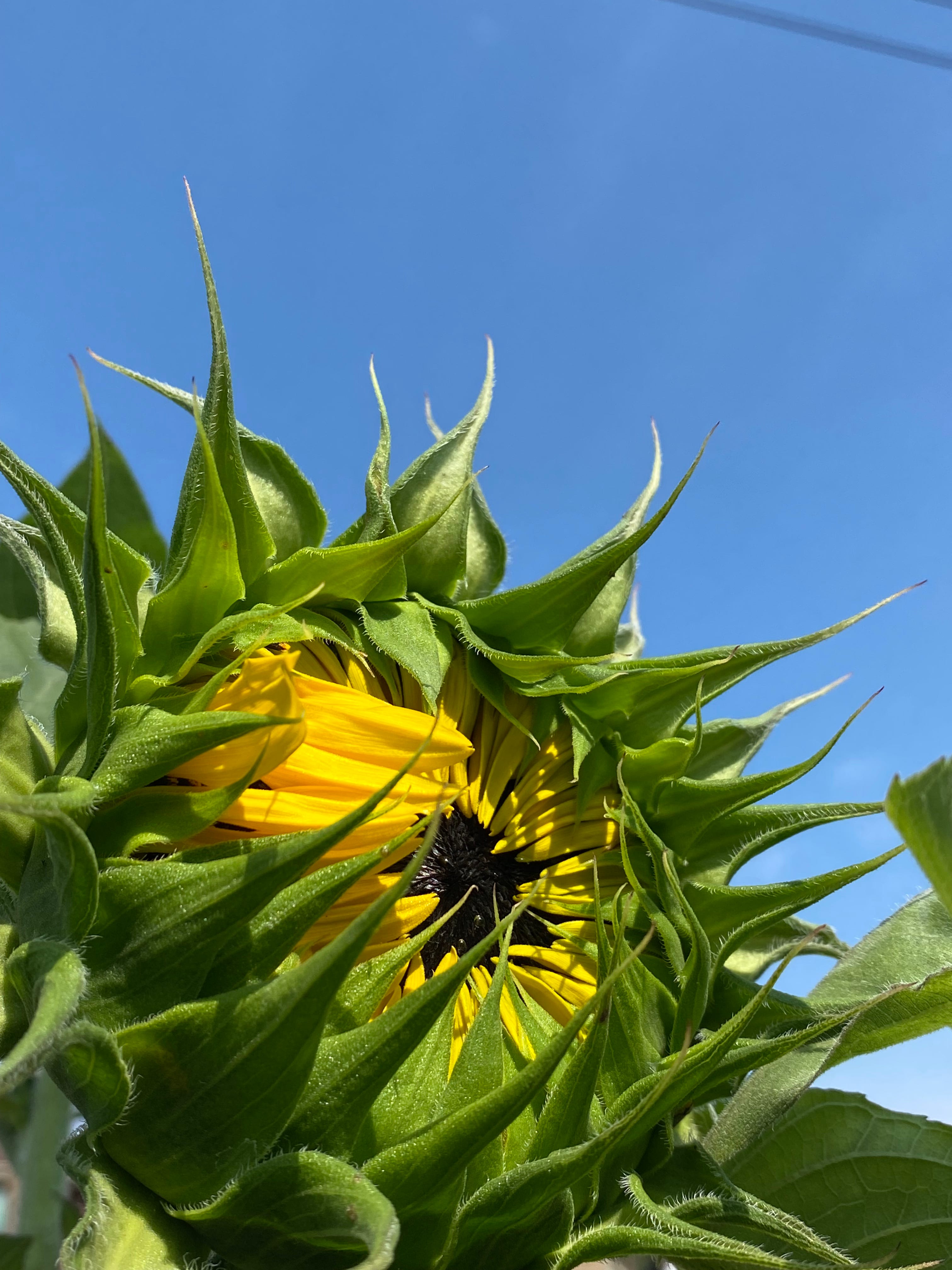
Sunflowers give summer its fundamental movement. In backyard gardens and rural fields, blooms follow the daily sun as it blazes from East to West. Although this floral sunbathing seems to reiterate a basic plant fact—that plants need light—it also raises a scientific question. Why do flowers, which don't use light to photosynthesize, seek out so much solar exposure?
If your botanical knowledge is missing a few branches, here's a quick redux on plants and the sun: Plants absorb sunlight to undertake photosynthesis—a metabolic process which uses sunlight to transform carbon dioxide and water into sugar and oxygen. The plant uses sugar to power its growth and development, and releases oxygen as a waste product. Photosynthesis takes place in plant cell components called chloroplasts, and chloroplasts contain chlorophyll—a pigment which reflects green light while absorbing red and blue. Some photosynthesis is carried out in green stems and branches, but most is done by leaves.
But sunflower blooms—and I probably don't have to remind you of this—aren’t green. They don't photosynthesize. So, why do these flowers chase the fire in the sky?
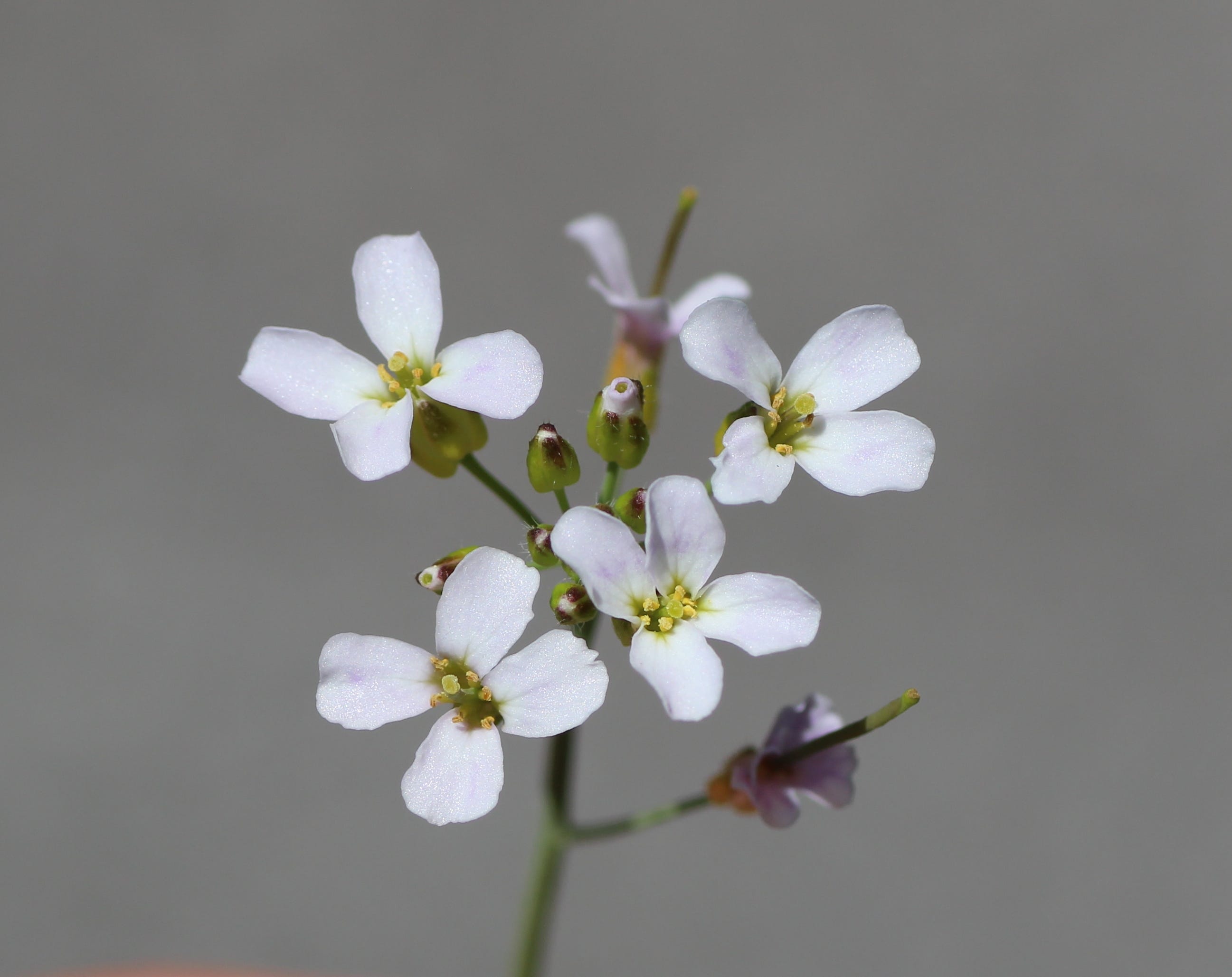

Research has suggested that sunflowers face the sun to increase the surface temperature of their flowers. Warmer flowers attract more pollinators, possibly because they are more visible to infrared-sensing insects. According to a paper by Akari Shibata et al., this sun-chasing behavior is found in other plants, too. Shibata and their collaborators studied the flowers of Arabidopsis halleri, a small mustard relative. They observed that A. halleri flowers turned upward on sunny and cloudy days, but faced the ground at night and on rainy days. Given that sunny days tend to be warmer, the researchers ran additional tests to understand the relationship between flower position, light exposure, light type, and temperature. In the end, they found that the mechanism which was responsible for flower position “allows flowers to face upward only when three conditions, that is, daytime clock phase, blue light, and warm temperature, are fulfilled.” In other words, there had to be light, a favorable temperature, and it had to be somewhere in the range of normal daylight hours for a flower to position itself upward. A. halleri flowers are turned by the pedicel—a short stem connecting the flower to the rest of the plant. Though Shibata's team is still sussing out the details, it seems like the pedicel positions the flower in much the same way a sunflower stem does. This process—heliotropism, meaning ‘turning to the sun’—is, at least in part, reliant on the plant hormone auxin.
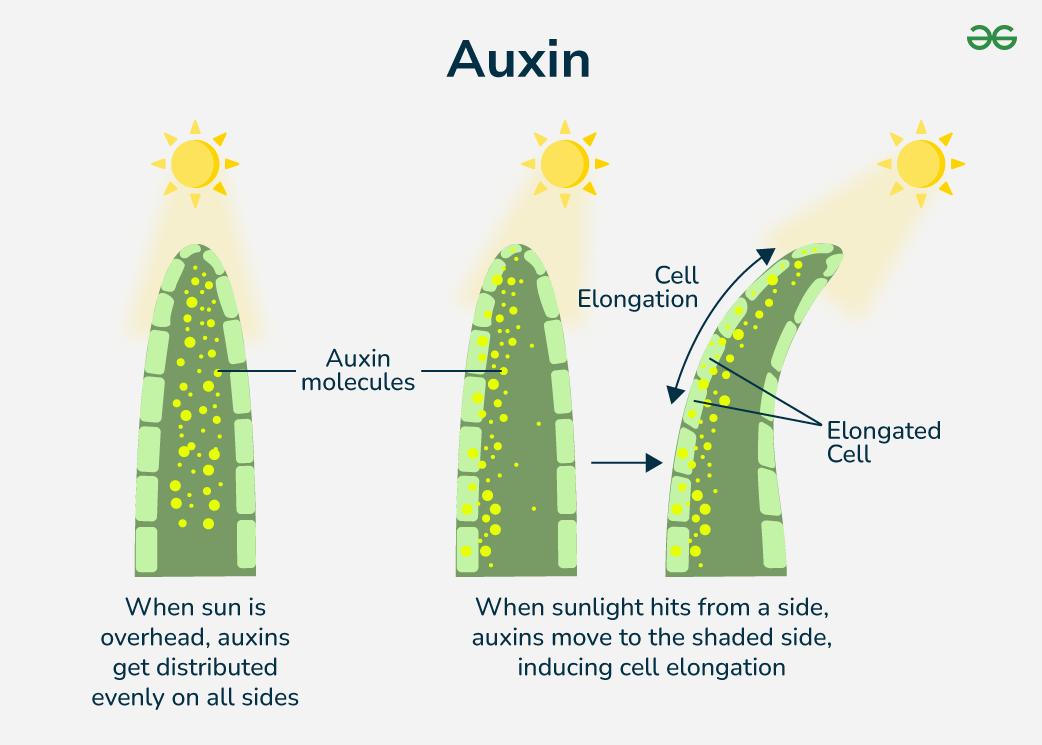
Auxin controls the elongation of cells in plants, making them taller. When a plant is struck by light on just one side, the auxin moves to the dark side of the plant, thereby concentrating the plant’s growth on that dark side. However, auxin positioning only partially explains the daily movements of sunflowers. According to a 2018 paper by Serrano et al., sunflowers move their blooms to face east each night, in preparation for dawn. Throughout the day, the bloom shifts westward. So, not only do sunflower blooms follow the sun, but they prepare each night to do so. This suggests that circadian rhythms—already observed in sunflowers—might also play a role in the sunflower's daily dance.
Sunflowers and Arabidopsis aren't the only plants moving in coordination with the sun. Serrano et al. note that the barrel cactus (Echinocactus platyacanthus), found in Mexico and the American Southwest, positions its apex towards the south, protecting its blooms from intense solar heat. Likewise, nasturtium flowers (Tropaeolum majus) turn away from the sun after fertilization, improving “the chances of the seeds to fall on rocks or wall surfaces, which are suitable places for seedling establishment." If this seems counter-intuitive, given plants’ photophilia, consider that—according to a paper by Bei et al.—plants only convert about 10% of the light they absorb into glucose, even under the best conditions. The remaining 90% can cause water loss or tissue damage. In plants like the tomato, they write, "heat stress reduces fruit number and weight in tomato and seed number per fruit." Plants often have to reduce their sun exposure by adjusting the position of their leaves or stems, which Serrano et al. call "paraheliotropism."


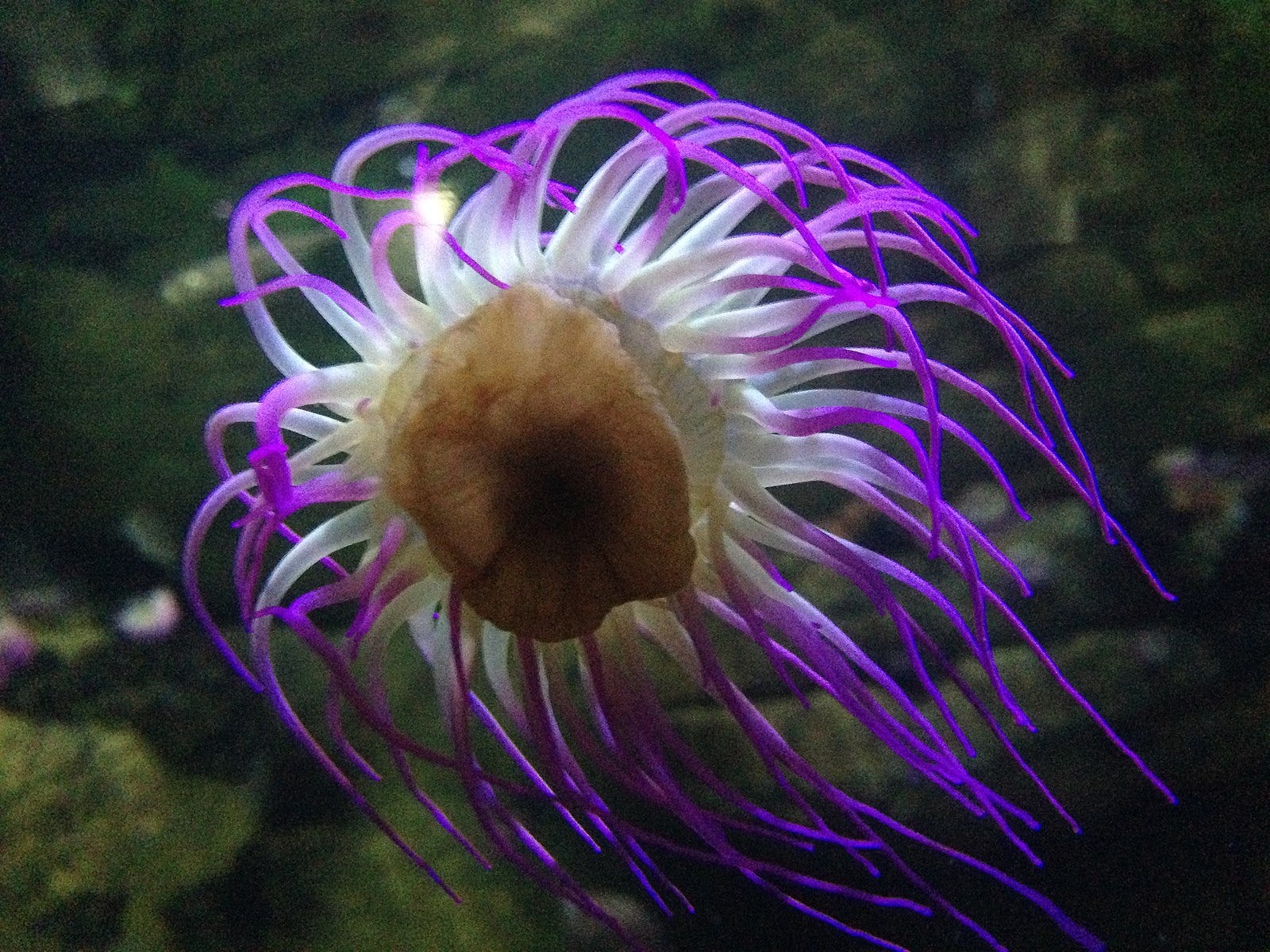
Although plants are the star of the photosynthetic show, they aren’t the only ones making a living out of sunshine. Beneath the ocean waves, some sea anemones are also following the sun. In a February 2025 article, Eliska Lintnerova reported on the heliotropic behavior of Anemonia viridis—a sea anemone which lives in symbiosis with microscopic algae. Lintnerova and her colleagues found that the tentacles of A. viridis specimens which were host to living colonies of microalgae responded to the presence of light and tracked its position. A. viridis specimens which did not host microalgae—'bleached' anemones—only had a weak, disorganized response to light exposure. This suggests that, while the animal component of this animal-plant creature may have some independent ability to sense light, it relies on the algal component for a more detailed sense. There are limits to the algae’s appetite for light, however. Much like barrel cactuses and nasturtiums, A. viridis aligns its tentacles parallel to the sun's rays, effectively shading itself. This prevents the anemone from taking on too much and damaging ('bleaching') the microalgae, thereby harming the whole organism. In fact, the anemone seems to position itself based on the amount of oxygen produced by the microalgae. In other words, the more light that strikes one spot, the more photosynthesis that occurs in one spot, the more oxygen output in that one spot, the more the anemone will position that spot away from the sunlight.

Being so high up the food chain, we can sometimes forget that solar radiation is the condition which allows life on this planet. And although a Boca burger doesn’t feel sun-powered, it is. Maybe you’re reading this from a shady deck, or in the poolside brightness. Either way, you're part of a complex set of movements taken by plants and animals who are trying to get their best light.